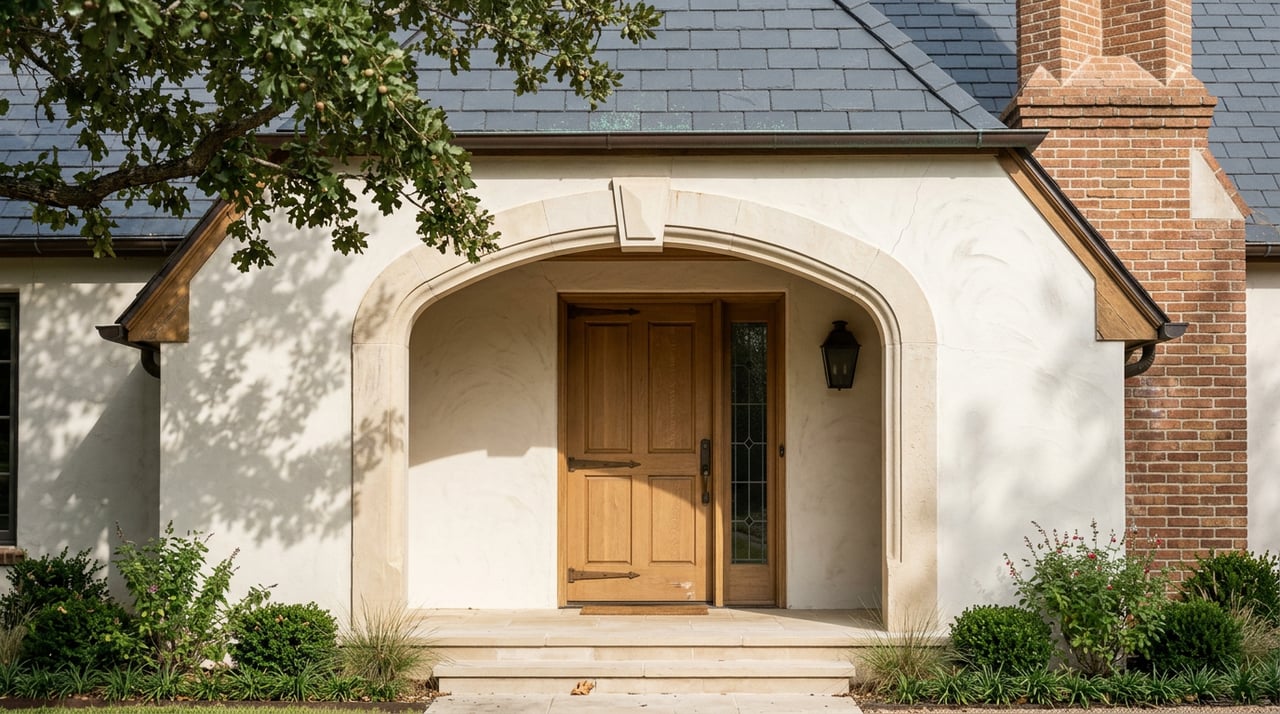
Selling a Lakewood Home: The Inspection and Overlay Issues That Catch Sellers Off Guard
August 6, 2026
August 6, 2026
A well-priced Lakewood Tudor still goes pending in about a month. That speed is the good news and the trap. Redfin recorded a median Lakewood sale price of $1.6M in February 2026, up 20.8% year over year, with homes clearing in an average of 33 days. Dallas as a whole sat at a $499K median and 40 days over the three months ending May 2026. The gap is real, and it changes how defects behave in a transaction.
When your listing goes under contract in the first weekend, the option period becomes the negotiation. Findings that would have pushed a suburban listing back to the MLS instead show up as a repair credit against a home the buyer already loves. In a slower market a seller can walk. In Lakewood, the seller writes a check. The gap between a smooth close and a five-figure concession is almost always a piece of due diligence the seller could have done for a few hundred dollars before the sign went in the yard.
Statewide numbers from the Texas Real Estate Research Center's July 2026 report show homes sitting an average of 64 days on market in May, with the typical seller price cut at $12,000, or 3.4% of the initial list price. Lakewood is running at roughly half that time on market and appreciating at more than five times the statewide pace. That combination is unusual, and it flips the leverage during the option period.
Buyers at the $1M-plus Lakewood price point are typically paying for architectural character, mature lots, and White Rock Lake access. They are not paying for cast iron, and they know it. Their inspectors know it too. Which brings us to the friction that actually shows up.
Cast iron drain lines were the standard in Dallas builds through roughly 1980. According to plumbing contractors who work the corridor, most cast iron systems are rated for a 40- to 50-year service life, which means the pipes under a typical Lakewood Country Club Estates home are 30 to 40 years past their design horizon. Semper Fi Home Inspections notes that Lakewood and the M Streets carry particularly high root-intrusion risk because the same mature oak canopy that sells the neighborhood is also drawing moisture toward every underground joint.
A sewer scope in Dallas runs $150 to $300 as an inspection add-on, per the 2026 pricing guide from InspectandTest. If the camera turns up channeling, collapse, or root breach that requires slab tunneling and repipe, Noble Property Inspections puts the typical DFW cost between $10,000 and $25,000. The math is not subtle. A pre-list scope costs less than a dinner at Rapscallion and either confirms a clean line you can market or gives you eight weeks to address the finding on your own timeline.
| Common finding | Typical DFW cost | Where it hits in the deal |
|---|---|---|
| Cast iron drain corrosion or root intrusion | $10K to $25K to tunnel and repipe | Option-period credit request |
| Pier-and-beam differential settlement | $4K minor, $15K+ for leveling | Structural report contingency |
| Galvanized supply lines (1930s to 1960s) | $8K to $20K to repipe | Buyer requests concession |
| Knob-and-tube or early aluminum wiring | Varies; often triggers insurance conditions | Underwriting delay |
| Undisclosed CD-2 exterior work | Redesign or removal at owner cost | Post-close liability |
Trinity River and Noble Property Inspections both flag Lakewood, Swiss Avenue, the M Streets, and Junius Heights as neighborhoods where pier-and-beam findings are routine. The mechanism is straightforward. Dallas sits on expansive clay that swells with spring rain and shrinks through the July and August drought. Live oaks, post oaks, and pecans pull enormous volumes of water out of the soil on one side of a foundation, and that asymmetric drawdown creates differential settlement long before a homeowner notices anything more than a sticky door. A 2023 Texas ASCE survey cited by Noble found roughly 40% of DFW homes show some degree of foundation distress.
For sellers, the practical question is what buyers see. Interior cracks radiating diagonally from door and window corners, gaps at the ceiling line, and doors that no longer latch are the same signals that appear in every inspection report. If the home has had prior pier work, gather the invoices and any transferable warranty before you list. Undocumented leveling reads as an unresolved defect. Documented leveling reads as maintenance.
On February 26, 2025, the Dallas City Council unanimously approved the expansion of the Lakewood Conservation District. The ordinance took effect March 31, 2025, and brought 146 additional homes under the CD-2 rules after a modified boundary line removed the south side of the 6800 block of Lakeshore.
The expansion added properties across the historic subdivisions of Westlake Park, Monticello, and Gaston Place. Included streets run through Lakewood Boulevard, Lakeshore Drive, Avalon Avenue, Tokalon Drive, Hideaway Drive, Westlake Avenue, and West Shore Drive. New construction within the district must fall inside one of five approved styles: Tudor, Spanish Eclectic, French Eclectic, Minimal Traditional, Neo-Classical, or Colonial Revival.
If your home is in the expansion area, the disclosure conversation is different than it was two years ago. Exterior remodels, window and door changes, roof material changes, paint color, fences, pools, and demolitions can all trigger a Conservation District Work Review Form through the City of Dallas ePlan portal. Councilmember Paula Blackmon confirmed at the time of the vote that homeowners with active permits could complete their work under the existing approval. Everything since then answers to CD-2.
Two practical seller implications. First, if any exterior work was performed after March 31, 2025 without a Work Review, the buyer's contractor will find it during their walk-through and it becomes a cure item. Second, the buyer is often more attached to the district than the seller realizes. The homes CD-2 was written to protect were built by Dines & Kraft, Clifford D. Hutsell, Charles Dilbeck, and Bertram Hill between roughly 1925 and 1946. A buyer paying $1.6M for a Hutsell wants the buff brick, the tile roof, and the stained glass. Original detail that a prior owner replaced with a big-box substitute is a price conversation, not a shrug. The empty lot at 7226 Lakewood Boulevard, where a Hutsell was demolished before the expansion passed, is the reference point neighbors bring to every showing.
The order matters because each step either surfaces a fixable issue or produces a document you can hand to the buyer's agent.
Homes built before 1978 also carry a lead-based paint disclosure obligation under EPA rules, and older tile, pipe wrap, and attic materials can contain asbestos that a renovation-minded buyer will want tested. Neither has to be a deal-killer. Both need to be handled inside the disclosure rather than discovered inside the option period.
Does a conservation district make my home harder to sell? Not in Lakewood. The 4.2% year-over-year appreciation the district has posted through 2026 reflects that the architectural protection is priced in as a positive by the buyers who choose this neighborhood. What creates friction is undisclosed exterior work performed without review, not the ordinance itself.
Should I replace cast iron before listing? Usually no. A full repipe is expensive and disruptive, and the buyer may prefer a credit so they can pick their own contractor. The value of the pre-list scope is knowing the condition before you price the home, not necessarily fixing it before you list.
How do buyers actually verify CD-2 status? Their agent or contractor checks the parcel against the CD-2 boundary map maintained by the City of Dallas Planning and Development department. The map covers Westlake Park, Monticello, and Gaston Place along with the original Country Club Estates footprint. It is public and takes about two minutes to confirm.
Selling a home built in 1930 is a different exercise than selling one built in 2005, and Lakewood rewards sellers who treat it that way. The homes that transact cleanly here are the ones where the seller answered the buyer's questions before the buyer thought to ask them. If you are thinking about listing a Lakewood Tudor, Spanish Eclectic, or Craftsman this fall, Graham Group will walk your property, flag the specific items likely to surface in the option period, and build a prep plan around the 33-day window rather than against it. Start your home story with us and request a free home valuation.
Stay up to date on the latest real estate trends.
A qualified agent with years of experience in the real estate market can help you determine the best improvements to make based on your particular market. When you’re ready to learn more, connect with us today. We’re happy to help!