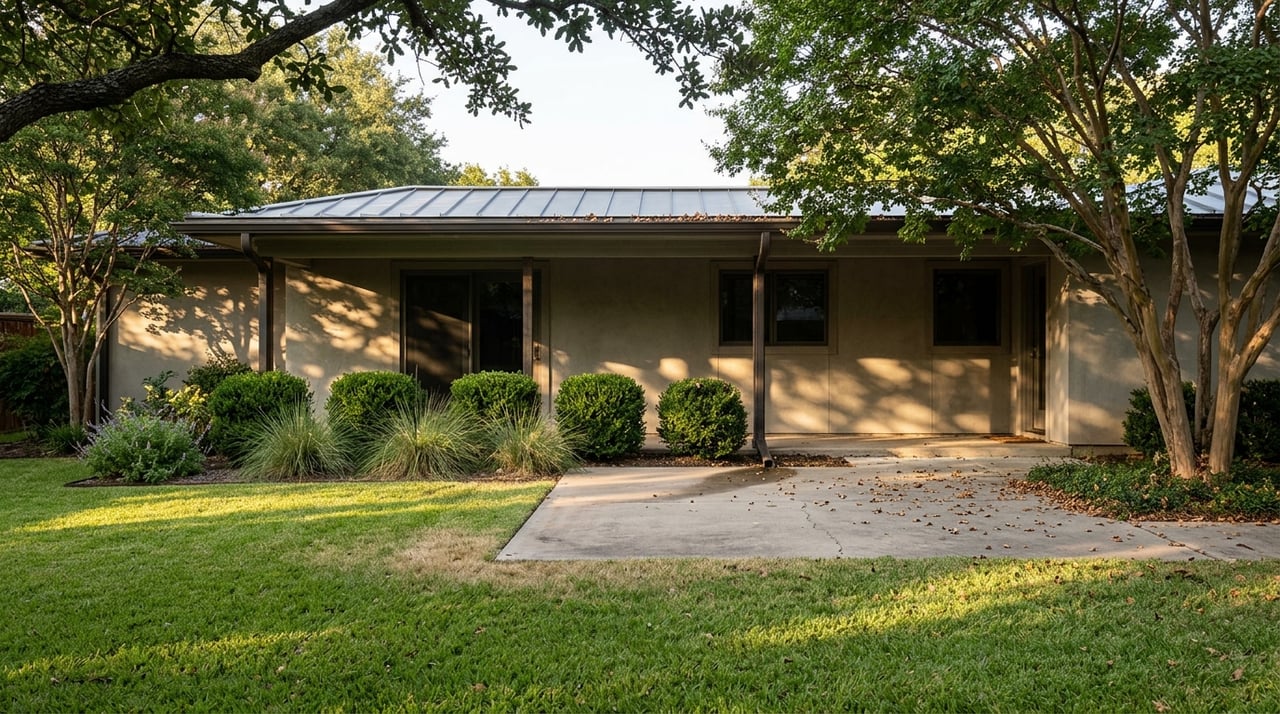
Lake Highlands Price Cuts and Inspection Negotiations: What Sellers Should Know
August 27, 2026
August 27, 2026
Homes in Lake Highlands are moving faster this year. Over the most recent 30-day stretch tracked at the neighborhood level, the median time on market fell to 39 days, down from 67 days over the same period a year earlier. On its own, that reads like a market picking up steam.
Here's the part that doesn't fit that story: over that same 30-day window, roughly 60% of active Lake Highlands listings had already taken a price cut, up from about 40% a year earlier. Homes are selling faster and getting marked down more often, at the same time. Those two numbers usually move together, not apart. Here, they describe separate parts of the transaction: active listings are being marked down more often, while the median time on market is falling.
Monthly tracking on the neighborhood puts Lake Highlands at roughly 3.2 months of housing supply, with a contract ratio (the rate at which active listings convert to contracts) sitting around 30. Both numbers point to a market that still leans toward sellers, not one where buyers are pulling back. If demand were genuinely cooling, days on market and price cuts should be climbing together. Instead, homes are going under contract faster even as a much bigger share of active listings have already taken price cuts. The sale-to-list ratio backs this up too: it slipped to 96.35% in that same window, down 3.6 points from a year earlier, meaning sellers are collecting a little less relative to their ask even while their homes attract offers quickly.
An active-listing price cut and a post-contract inspection negotiation are different events. One kind of price cut can happen before a home gets a single showing: a seller overshoots on price, the phone doesn't ring, and the number comes down to draw buyers back in. The other is a negotiation after a buyer is already under contract, once an inspection report lands during the option period and the price is revised downward, or reworked into a closing credit, to keep the deal alive.
What gives a buyer leverage is the option period. It's during that window that the general inspection happens, along with anything specialized like a sewer scope or a foundation reading. If the report turns up something real, the inspection can lead to a negotiation.
In a year with more inventory sitting on the shelf, more sellers are saying yes to those requests rather than testing whether the next buyer will be more forgiving.
A Lake Highlands ranch lists at $625,000 and goes under contract in eleven days. The inspection turns up a cast iron sewer line with root intrusion and a breaker panel. The buyer's repair request asks for a $9,000 credit. The seller agrees rather than restart the search, and the sale closes at what the MLS now records as a reduced price, even though nothing about buyer demand for that street ever changed.
That example shows how an inspection can lead to a post-contract renegotiation, even after the listing has attracted a buyer.
Lake Highlands was built out largely during the 1960s and 70s, and several of the systems installed then are reaching the point where an inspector's flashlight finds them reliably.
Not every corner of Lake Highlands carries the same exposure. The alphabetically named streets, known for mid-century ranches on generous lots, offer some of the best lot size per dollar in the neighborhood, which also means original 1960s and 70s plumbing and wiring are still common there. The more entry-level 75243 pockets around Merriman Park Estates tend to be more price-sensitive to inspection findings, since thinner margins leave less room to absorb a five-figure credit request without the sale price visibly moving.
Sellers who front-load the inspection instead of waiting for the buyer's version tend to avoid the mid-transaction repricing entirely:
For sellers who'd rather handle this kind of prep before listing than negotiate it under a ticking option-period clock, that's exactly the kind of groundwork Compass Concierge is built to support, covering the inspection-adjacent repairs before a buyer's report ever forces the conversation.
The instinct to price defensively, either low to avoid a fight or high to leave room for one, misreads what's actually driving the neighborhood's numbers. With supply still under four months and the contract ratio favoring sellers, an accurately priced Lake Highlands home should draw a contract within the first few weeks regardless. The number worth protecting isn't the one on day one. It's the one that survives the option period. A seller who has already resolved the sewer line, the panel, and the HVAC paperwork walks into that window with little left to negotiate, and the final sale price is far more likely to match what hit the MLS the day the sign went up.
When does a buyer look for these issues? The option period is negotiated between buyer and seller. General inspections and specialized checks, like a sewer camera or a foundation reading, take place during that window.
Is a pre-listing sewer camera worth it if my home wasn't built in the 60s or 70s? It's less urgent than for a pre-1975 home, but Lake Highlands properties have often changed hands multiple times with partial updates, so confirming pipe material before listing is still a reasonable step if you're not certain of your home's plumbing history.
If you're weighing whether to list your Lake Highlands home now or spend a few weeks getting ahead of what an inspector will find, Graham Group can walk through your specific street, your home's systems, and what a realistic option-period conversation might look like. Start your home story with us, get a free home valuation, and go into your listing knowing exactly where the negotiation is likely to happen.
This article is general information, not legal, tax or financial advice. Consult a qualified professional about your situation.
Stay up to date on the latest real estate trends.
A qualified agent with years of experience in the real estate market can help you determine the best improvements to make based on your particular market. When you’re ready to learn more, connect with us today. We’re happy to help!